
Every year, Chinese New Year transforms the daily lives of millions of people: families reunite, cities shift their pace, and an entire country springs into motion. In 2026, the changeover happens on Tuesday, February 17, which marks the beginning of the Year of the Fire Horse.
The celebration traditionally lasts 15 days and ends with the Lantern Festival on March 3, 2026. In mainland China, the official calendar announces 9 days off for the Spring Festival, from February 15 to 23, 2026, with catch-up days on February 14 and 28.
If you’re planning a trip, this is the most “special” time of the year: transport congestion, modified timetables, and services that sometimes run slower than usual. To avoid unpleasant surprises, book ahead, and make sure you have the right health insurance before you leave.
Key dates for Chinese New Year 2026
Here’s the most useful reference point if you’re planning a trip, an expatriation, a work mission, or simply updating your calendar.
| Event | Date |
|---|---|
| Chinese New Year 2026 (beginning of the year) | |
| Official vacations in China (Spring Festival) | to , 2026 |
| Catch-up days | and , 2026 |
| Lantern Festival (traditional end of festivities) |
Why does the date change every year ?
It’s often called “Chinese New Year,” but you’ll also see the name “Spring Festival.” The date changes because the celebration follows a lunisolar calendar, so it doesn’t align with the Gregorian calendar. In practice, Chinese New Year falls between late January and mid-February depending on the year. That’s why many people “miss” it when their calendar doesn’t include Asian holidays.
If you were born in January or early February, this detail matters: your Chinese sign depends on the date of Chinese New Year in your birth year, not on January 1. That’s why two people born in the same calendar year can belong to two different signs.
Chinese New Year 2026: which sign and which animal ?
In 2026, the zodiac animal is the Horse, and the year’s association with the Fire element creates the common expression “Fire Horse.”
Traditionally, the Horse symbolizes momentum, speed, the drive to move forward, and above all, independence. In practical terms, many horoscope-style explanations frame this as a year for action, new projects and change. Keep one important nuance in mind : astrology-based interpretations vary by source, so you should read them as a cultural lens, not as absolute truth.

When to celebrate Chinese New Year ?
On paper, the official holidays run from February 15 to 23, 2026. In reality, you often feel the impact before and after, because many people travel to reunite with their families and a large number of businesses slow down, especially in industry, logistics and administration.
This massive travel period around Chinese New Year has a name : chunyun. It directly affects prices, ticket availability and crowd levels in train stations and airports.
If you travel during this window, you don’t just “experience” a holiday, you step into a nationwide wave of family homecomings. You benefit from booking early, keeping your schedule flexible and avoiding tight connections whenever possible.
Are you traveling during Chinese New Year 2026 ? Don’t forget to take out your Mondassur health insurance before you leave !
Chinese New Year traditions
Chinese New Year puts family at the center of everything. Many people return to their hometown, sometimes after months of working far from home. The most important moment is often the New Year’s Eve dinner, when families share symbolic dishes, exchange wishes for luck and prosperity, and mark the transition into the new year together.
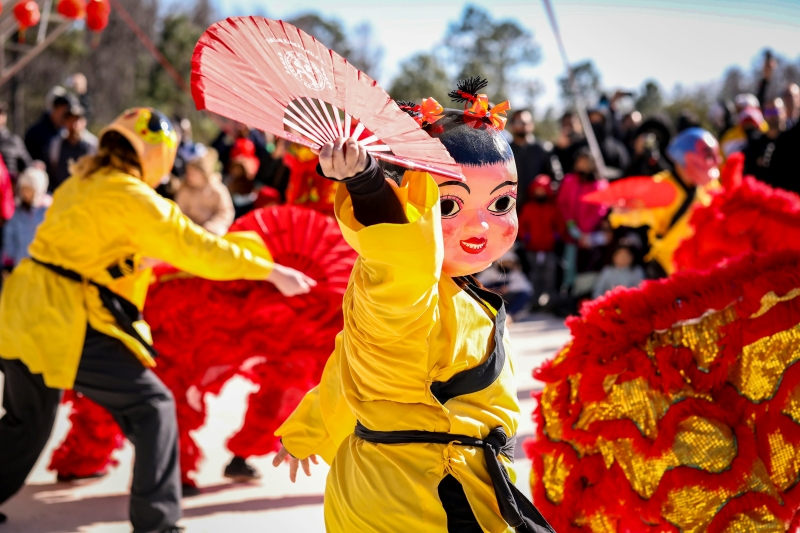
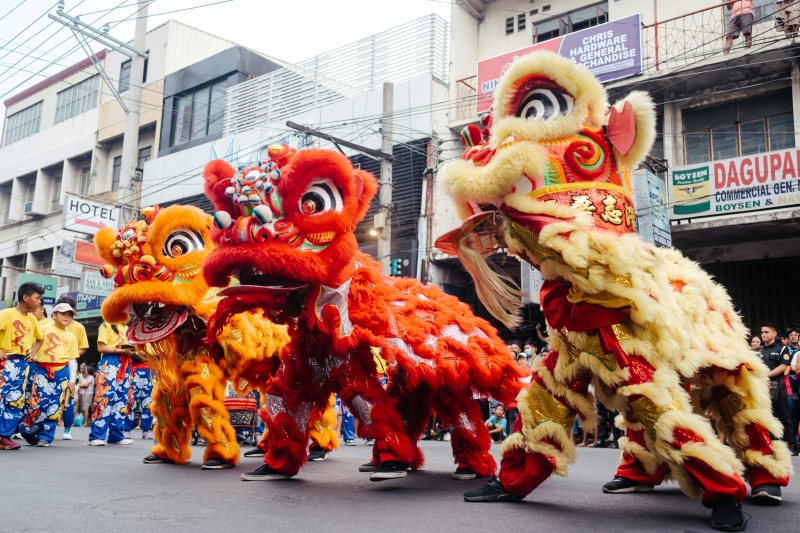
You’ll also see the color red everywhere. Red decorations, banners, lucky characters, and red envelopes (“hongbao”) all reflect ideas of good fortune and protection. In some places, you’ll come across lion dances (and sometimes dragon dances), parades or street performances. Depending on the city and local rules, authorities may restrict firecrackers and fireworks, but the intention stays the same : people make noise, chase away the “bad” and celebrate the start of a new cycle. And because crowds, firecrackers and constant moving around can sometimes lead to minor accidents, it also makes sense to stay properly covered so you can travel with peace of mind.
When it comes to superstitions, many families lean into what “brings good luck” and avoid anything that might “break harmony.” You don’t need to memorize every rule, just remember that people value kind wishes, politeness, generosity and visits. If you respect the spirit of the celebration, you’ll fit in naturally.
Where do you celebrate Chinese New Year ?
China remains the epicenter, but Chinese New Year celebrations reach far beyond its borders. You’ll find them across many Asian countries and within major diaspora communities worldwide. The experience can vary a lot by destination : in mainland China, you mainly feel the scale of travel and official holidays, while elsewhere you often experience more public festivals, decorations and community events.
- If you’re traveling in Southeast Asia, Singapore is one of the easiest places to enjoy Chinese New Year as a visitor. The city dresses up with decorations, certain districts become especially lively and organizers often design events with travelers in mind. However, medical care can quickly become expensive there, so to avoid unpleasant surprises, protect yourself with health insurance for Singapor before you leave.
- Indonesia offers a more varied experience depending on the region and community, but you’ll still find meaningful celebrations, especially in areas with a strong Chinese diaspora. Planning to go ? Learn more about health insurance in Indonesia.
And if you want a wider cultural view, other countries celebrate related holidays with their own unique traditions : Vietnam celebrates Têt, and Korea celebrates Seollal, a great way to compare customs without feeling like you’re seeing the exact same festival twice.
What mistakes should you avoid when traveling during Chinese New Year ?
The first mistake is to treat this period like a “normal” week. During Chinese New Year, you face three challenges at once: huge waves of travelers, changed schedules, and lower availability for certain services.
If you want a stress-free trip, book early and keep your itinerary simple. You save time when you avoid tight connections and build in buffer time between journeys. In big cities, hotels fill up quickly on key dates, then entire neighborhoods can feel quieter as many residents leave. This creates a paradox : some places look “emptier” once you arrive, but getting there (train or plane) remains the hardest part.
Also, pay attention to the real opening hours. Many restaurants and small shops close temporarily, while tourist-heavy spots may stay open but run on limited hours. If you have a specific goal (a visit, an appointment, a formality), check official schedules in advance and keep a Plan B.
Finally, health becomes very real when you travel. A cold, food poisoning or a fall can happen anytime. You don’t want to learn on the spot how local care works, whether you must pay upfront or who to call in an emergency.
Plan your trip with peace of mind with our health insurance for China !
Health and travel insurance : what to check before leaving for China (or anywhere else)
In China, you quickly adjust your daily routine. Street food tastes incredible, but it can sometimes upset your stomach. Big cities move fast, and you often rely on metro, taxis or scooters to get around. Add heavy traffic and different driving habits, and a fall, a minor collision, or simple food poisoning can turn a normal day into a real headache. That’s why clear health insurance (care, assistance, repatriation) matters, it’s common sense, not a “nice-to-have.”
If you travel as a tourist, you usually want coverage that stays simple and effective. Make sure your plan includes medical expenses that match real costs, 24/7 assistance you can reach quickly, repatriation if needed and third-party liability abroad. This combination covers the most common situations that hit both your budget and your peace of mind. To get the basics right fast, take a look at tourist travel insurance.
If you study in China, the logic changes. A long stay increases the number of situations you might face (consultations, tests and sometimes hospitalization). Check the coverage period, the rules during school breaks and how claims work (upfront payment, reimbursement, and procedures). A strong student plan does more than “insure you”, it makes life easier when you actually need care. If you plan an international program, compare typical needs with student international heatlh insurance.
If you prepare an expatriation to China (or you already live there), you need long-term protection that supports everyday life. Confirm coverage for routine care and hospitalization, set limits that fit your situation, and add the options you truly need (dental, vision, maternity). Keep coverage continuous if you move between cities, return home from time to time or later relocate to another country. Your goal stays simple : secure your daily life in China, not just short trips. Build your long-stay cover with expatriate heatlh insurance.
Conclusion
Chinese New Year is more than a date and a zodiac sign. It changes the rhythm of entire countries, especially when you travel in Asia. If your route includes China, plan for the logistics (bookings, delays, timetables), but also think about the health side : surprises happen fast and you don’t just want coverage, you want to know what to do and who to call when it happens.
If you plan a trip to China, you can find the right protection at Chinal travel insurance. If you study there, choose cover that matches a long stay with health insurance for students in China.
Modified by Aleksander Siebert on 01/14/2026
Need advice on finding health insurance ?
Chinese New Year 2026 takes place on Tuesday, February 17, 2026. It marks the first day of the new year in the traditional lunisolar calendar.
In 2026, we enter the Year of the Horse, linked to the Fire element (often called the “Fire Horse”). The Horse usually connects to momentum, movement and independence in tradition.
Traditionally, celebrations last 15 days and end with the Lantern Festival on March 3, 2026. In practice, the festive atmosphere can start earlier or last longer depending on the city, but this date remains the most reliable reference.
China’s official calendar announces 9 days off for the Spring Festival, from February 15 to 23, 2026. It also includes catch-up workdays on February 14 and 28, 2026, which can surprise you if you plan a trip, a work mission or delivery timelines.
Even though the “official” celebration lasts 15 days, travel disruption often lasts longer : high transport crowds, reduced availability, slower business activity, and changed schedules. To avoid issues, book early and keep your plan flexible around mid-February.
There’s no single answer : horoscopes differ across traditions and authors. To stay credible and useful, focus on the Horse’s general theme (energy and forward motion) and give practical advice, act without rushing, keep room to adapt, and avoid burning out.
Before you travel during Chinese New Year, make sure your cover includes medical expenses, 24/7 assistance, repatriation if needed and third-party liability. During a peak period with crowded transport and tight schedules, clear support in case of an emergency makes a real difference.
